
Observing a New Wave in the Real Estate Market:
Kobra Sedghi
?Is Tehran Heading Toward a Real Estate Turning Point
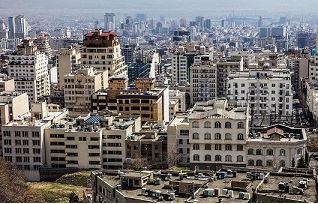
Polimalinews– Iran’s new restrictions on the development of residential townships and new cities in Tehran and Alborz, combined with measures to facilitate the sale of surplus bank-owned properties, could reshape investment patterns in the country’s real estate market. The key question is whether these changes will redirect capital toward other cities and create new property investment opportunities.
Summary
This article examines the potential short- and medium-term effects of development restrictions in Tehran and Alborz, the disposal of surplus bank-owned properties, and the prospects for real estate investment across Iran.
Keywords: Tehran real estate market, Iran housing market, land prices, property investment, Alborz, surplus bank assets, bank property sales, new cities, real estate opportunities, Iran property market.
Development Restrictions and the Outlook for Tehran’s Property Market
Iran’s land and housing market could face significant changes in the coming months, with implications extending beyond Tehran and Alborz. A new government resolution restricts the establishment of new residential townships and new cities in the two provinces for three years. At the same time, the Central Bank of Iran has broadened the mechanisms available for disposing of surplus bank-owned properties.
Together, these measures raise an important question for investors: could they change the direction of capital flows in Iran’s real estate market?
Tehran and Alborz: Could Tighter Supply Push Prices Higher?
Cabinet Resolution No. 87093, dated October 18, 2026, prohibits the issuance of permits for new residential townships and new cities in Tehran and Alborz for three years. The measure does not constitute a blanket ban on construction. Development within existing urban boundaries remains subject to approved plans and applicable regulations.
In the short term, expectations of tighter future supply could put upward pressure on asking prices for certain plots of land and properties. Land with valid construction permits and projects that are ready to proceed may become more attractive to investors.
However, restrictions on future development do not automatically translate into higher transaction prices. Household purchasing power, construction costs, access to financing and actual market activity will remain key factors. Asking prices may increase even when buyers are unable or unwilling to pay them.
Over the medium term, reduced development opportunities in certain areas could encourage some investors to consider surrounding cities or other regions of Iran. Yet the potential benefits are unlikely to be distributed evenly. Cities with employment opportunities, adequate infrastructure, transport links and sustained housing demand may be better positioned than markets driven mainly by expectations of future price appreciation.
Bank Property Sales Could Increase Market Supply
A separate policy development may influence the market from the opposite direction. An amendment to the guidelines governing the disposal of surplus assets held by credit institutions, approved by the Central Bank’s High Council in July 2026, expanded the available methods for transferring these assets.
In addition to auctions, the framework includes land and building investment funds, real estate investment funds and tokenization, subject to the Central Bank’s regulations.
If a substantial volume of bank-owned properties enters the market, the additional supply could affect prices and transaction conditions in the areas concerned. The impact will depend on the number, type and location of the properties, their asking or sale prices, and the payment terms offered.
The effect is unlikely to be uniform across the market. For example, the sale of commercial properties in one district may have little direct influence on residential apartment prices elsewhere.
The two policy measures could therefore produce different effects: development restrictions may strengthen expectations of future supply constraints, while the disposal of existing bank assets could increase available supply in particular segments. The net impact will depend on how these forces interact in practice.
Where Could Investment Opportunities Emerge?
In this environment, a low purchase price alone is not a sufficient basis for a property investment decision. Investors should assess legal ownership, construction permits, access to infrastructure, completion costs, rental demand and the potential to resell the asset.
Land with valid permits and established infrastructure may offer greater certainty than plots whose development depends on future changes in land use or uncertain planning approvals. Similarly, unfinished projects may warrant consideration when their remaining costs, legal status and potential sale value can be assessed reliably.
Surplus bank-owned properties may also present opportunities, but their classification as bank assets does not necessarily mean they are undervalued. Investors need to compare proposed sale prices with comparable transactions and account for maintenance expenses, legal constraints and resale prospects.
Across other parts of Iran, investment decisions should focus on areas with sustainable employment, genuine housing demand and adequate infrastructure. Markets where prices rise without corresponding demand may leave investors holding illiquid assets that are difficult to sell.
A Potential Turning Point, Not a Guaranteed Outcome
The development restrictions in Tehran and Alborz and the expanded mechanisms for disposing of surplus bank properties are two important developments to monitor. Neither measure, on its own, determines the future direction of Iran’s property market.
In the short term, asking prices, completed transactions and construction activity will provide important signals. Over the medium term, the volume of bank property sales and evidence of capital moving into other regions will help clarify whether a broader shift in investment patterns is taking place.
For investors, the central question is not simply which city may become more expensive. It is which property offers a reasonable purchase price, genuine underlying demand and a realistic prospect of use, development, rental income or resale.
Ultimately, any shift in Iran’s real estate market will create sustainable investment opportunities only where price expectations are supported by economic fundamentals and actual demand./Polimalinews
برچسب ها :Alborz ، bank property sales ، Iran housing market ، Iran property market. ، land prices ، new cities ، property investment ، real estate opportunities ، surplus bank assets ، Tehran real estate market
- نظرات ارسال شده توسط شما، پس از تایید توسط مدیران سایت منتشر خواهد شد.
- نظراتی که حاوی تهمت یا افترا باشد منتشر نخواهد شد.
- نظراتی که به غیر از زبان فارسی یا غیر مرتبط با خبر باشد منتشر نخواهد شد.





ارسال نظر شما
مجموع نظرات : 0 در انتظار بررسی : 0 انتشار یافته : ۰