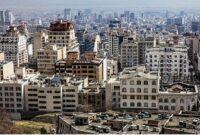
?Is Tehran Heading Toward a Real Estate Turning Point
This article examines the potential short-term and medium-term consequences of certain restrictions imposed on physical development in Tehran and Alborz.

**Two-Line Summary:** Rising energy carrier prices and the worsening gas imbalance have turned green investment in Iran from a policy choice into an economic, security, and legal necessity. Realizing this imperative depends, above all, on stabilizing real returns and urgently removing foreign-exchange and administrative bottlenecks.
- Iran a market of "high opportunities and high risks"—and precisely for that reason, it belongs only to those who accept both simultaneously and understand its internal pressure logic. polimalinews.
-Beyond its geopolitical consequences, the Iran war has become an accelerator of the reallocation of capital, resources and economic power in the United States, amid a broader transformation toward technological capitalism.
-We, the authors of this text, know one thing well: sanctions on Iran are not a policy, but an international industry that has been built over nearly half a century and has now become an economic system. Therefore, they cannot and should not be eliminated so easily. Lifting sanctions on Iran is a red line.
-Sanctions are an invisible cage. Enrichment and the Strait of Hormuz are two levers that can unlock this cage for Iran. But unlocking does not mean leaving the cage
- The 2026 budget rightly rejects price controls, but freeing prices alone cannot save Iran's economy. Without fair compensation for the poor, massive infrastructure investment, and reconnecting to global markets (capital, technology, banking), price liberalization will only increase suffering and destroy small industries. Price reform is necessary but not sufficient.