
From a Ground-Based Economy to Technological Capitalism:
Javid Shirazi
The Iran War and the New Economic-Political Divide in America
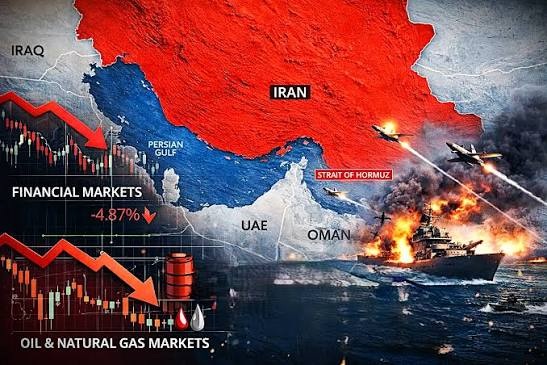
Polimalinews-. To preserve its global economic and strategic position, the United States must raise productivity, lower production costs, strengthen its technological capabilities, and redesign the networks through which goods, energy, capital, and information move.
Thank you for reading this post, don't forget to subscribe!Artificial intelligence, semiconductors, automation, data, and computing infrastructure are important components of this transformation. But they are not the whole story. Energy, transportation, logistics, economies of scale, supply chains, capital ownership, and access to infrastructure are equally important.
The deeper transformation concerns the relationship between capital, labor, and citizenship.
As technology and capital allow companies to produce more with fewer workers, the productive capacity of the economy can increase while the direct participation of parts of the population in wealth creation declines.
This creates a new paradox for American capitalism: the economy may become substantially more productive and wealthier while ownership of the productive capacity behind that wealth becomes increasingly concentrated.
The war with Iran has not created this transformation. But it has accelerated it.
By redirecting public resources toward defense, energy and security, changing the cost of energy, expanding government demand for military production, altering consumption patterns and influencing capital flows, the war is helping accelerate—and in some areas institutionalize—changes already underway in the American economy.
A New American Economy: More Output, More Concentrated Capital
Capitalism survives by increasing productivity.
The United States cannot indefinitely compete with China while carrying higher production costs, inefficient supply chains, and expensive transportation and logistics systems.
That is why the American economy is moving toward greater automation, advanced manufacturing, semiconductors, robotics, artificial intelligence, energy infrastructure, and more resilient supply chains.
But one of the least discussed elements of this transformation is economies of scale.
The cost of production is not determined solely inside a factory. Transportation, warehousing, energy, logistics, distribution, and supply-chain complexity can account for a substantial share of the final cost of goods.
Reducing those costs allows capital to be redirected toward more productive uses.
For this reason, the competition between the United States and China is not simply a technological competition. It is also a competition over the cost of producing and distributing goods at scale.
Artificial intelligence is one instrument in this transformation—not its ultimate objective.
The objective is higher productivity.
The problem begins when higher productivity is accompanied by greater concentration of ownership.
If a company can produce substantially more with greater capital intensity, advanced technology, and fewer workers, the return on capital can rise while the relative role of labor declines.
That is not a failure of capitalism in itself.
It is one of the fundamental dynamics of technological capitalism.
But it has significant economic and political consequences.
The Competition for Ownership of New Wealth
The central question is therefore no longer simply whether the United States can create more wealth.
Its technological and financial capacity to do so is considerable.
The more difficult question is:
Who owns the new productive capacity that creates this wealth?
Companies controlling semiconductors, data, software, energy, computing infrastructure, defense technologies, and large-scale production networks are not merely selling products.
They increasingly control parts of the infrastructure through which the modern economy creates value.
This is where the traditional, physical economy increasingly intersects with technological capitalism.
The transformation does not eliminate traditional assets. Land, energy, raw materials, factories, transportation and infrastructure remain essential.
What changes is their relationship with technology and capital.
Capital capable of integrating these resources at greater scale and lower cost gains increasing economic power.
The competition is therefore not merely for ownership of companies.
It is increasingly a competition for ownership and influence over the infrastructure of wealth creation itself.
Who Has Influence Over the New Capital?
The forces behind this transformation should not be treated as a single group.
Technology companies, institutional investors, investment funds, defense contractors, energy companies, political networks, large capital holders, and foreign actors have different interests and often compete with one another.
Yet capital is moving toward a number of interconnected areas: technology, energy, infrastructure, scale, data, defense, and assets capable of generating higher returns.
Ownership, however, is only one source of power.
Economic influence can also arise through control of technology, intellectual property, data, infrastructure, government contracts, financing, regulation, and political access.
This produces a broader political-economic question:
Who merely benefits from the new economy—and who has the ability to influence the rules under which it operates?
That distinction becomes particularly important when examining the economic consequences of war.
The Iran War: Accelerating an Economic Reallocation
The war with Iran has emerged in the middle of this structural transformation.
War does not necessarily create new economic resources. It can, however, rapidly change where existing resources are allocated.
Governments spend more on defense, energy security and strategic infrastructure. Defense companies receive additional orders. Energy markets react to supply risks. Transportation costs rise. Businesses and households adjust consumption and investment decisions.
The result is a redistribution of economic demand.
Government spending becomes corporate revenue.
Corporate revenue becomes profit.
Profit affects valuations and investment returns.
Investment returns flow disproportionately toward those who own the underlying assets.
At the same time, higher energy and transportation costs can reduce the purchasing power of households and raise costs for businesses.
The war therefore becomes not only a military event, but also a mechanism through which economic resources are redirected across sectors and ownership structures.
This does not require a single central plan.
Governments, corporations, investors and consumers make separate decisions. Yet the combined effect of those decisions can change the distribution of income, capital and economic power.
Energy: Where the Money Trail Becomes Visible
Energy provides one of the clearest examples.
Higher geopolitical risk can raise the cost of oil and other forms of energy. But higher energy prices do not affect every economic actor equally.
Energy producers may benefit from higher prices, while households, manufacturers and transportation-dependent businesses face higher costs.
Europe and China, as major energy consumers, are particularly exposed to disruptions in global supply.
American households are not insulated either.
Yet higher energy costs can also alter economic behavior.
Consumers may move toward more fuel-efficient vehicles. Businesses may invest in energy efficiency. Manufacturers may reconsider supply chains. Capital may move toward technologies capable of reducing energy dependence.
The result is a complex redistribution of resources.
Some sectors lose purchasing power.https://polimalinews.ir/
Others gain investment and demand.
The same applies to fuel consumption. If higher energy costs encourage American households and companies to reduce waste and improve efficiency, resources previously devoted to inefficient consumption can potentially be redirected toward investment and productive activity.
The economic consequences are therefore not limited to the price of oil itself.
They include changes in consumption, investment, technology and capital allocation.
Defense Spending: One of the Major Channels of Resource Transfer
A second major channel is defense spending.
During war, the federal government becomes a large-scale buyer of military equipment, ammunition, air defense systems, aircraft, intelligence capabilities, software, cybersecurity services and other strategic technologies.
This creates additional demand for private companies.
The economic chain is straightforward:
Federal spending → government contracts → corporate revenue → corporate profits → asset valuations → investor returns.
That does not mean every defense company benefits equally, nor that every investor gains.
But it does mean that the distribution of government expenditure matters.
To understand the economic consequences of war, it is therefore insufficient to look only at the size of the federal budget.
We must also examine where that spending ultimately goes, which companies receive the contracts, which industries expand, and who owns the assets that benefit from the expansion.
The War and the Power of the Dollar
All of this is connected to a larger issue: the international power of the U.S. dollar.
Dollar power does not rest simply on the ability of the Federal Reserve to create money.
It rests on the depth of American financial markets, the size and productivity of the economy, technological leadership, energy capacity, intellectual property, military power, institutional credibility, and the ability of the United States to attract global capital.
A more productive American economy capable of generating greater returns can strengthen the foundations of the dollar.
But war also creates substantial fiscal and economic costs.https://polimalinews.ir/
Higher defense expenditures, energy costs and security spending can place additional pressure on government finances and redirect capital toward specific sectors.
At the same time, geopolitical instability can increase demand for dollar-denominated assets.
The relationship between war and the dollar is therefore complex.
What matters is that the United States needs a highly productive economy capable of generating sufficient wealth to sustain both domestic prosperity and the costs associated with its global position.
Productivity is therefore not merely an economic objective.
It is also part of the infrastructure of American global power.
Israel and the Question of Influence
American foreign policy does not develop in isolation.
Political networks, defense industries, lobbying organizations, ideological movements, foreign allies and domestic constituencies all play roles in shaping policy in Washington.
Israel is one of the most significant actors in this broader environment.
Israeli governments have repeatedly described Iran as a major strategic threat, while senior Israeli officials have advocated weakening Iran’s regional power and changing the balance of power in the Middle East.
At the same time, Israel retains substantial support and sympathy within important segments of American society.
That support, however, is not uniform. Public attitudes toward Israeli government policies have also become more divided, particularly as the consequences of prolonged conflict have become more visible.
Christian Zionist movements constitute another important part of the American political landscape. For some of these groups, Israel is not merely a geopolitical ally but also has a religious and eschatological significance.
These developments have contributed to concerns among parts of the American patriot movement and other conservative constituencies about the influence of pro-Israel networks and Christian Zionist organizations on American foreign policy.
The central economic-political question is not to identify a single actor as the cause of American policy.
It is to understand which networks have the greatest ability to influence decisions about foreign policy, government spending, security priorities and the allocation of resources.
The Patriots: Anxiety Over a Changing Economy and Political Order
The American patriot movement is not a single organization or a unified political bloc.
Its members hold different views on economics, foreign policy, Israel, government and war.
But an important concern shared by parts of this movement is the perceived erosion of the economic and political position of the ordinary citizen relative to concentrated capital and institutional power.
This concern goes beyond income.
Freedom, private property, individual rights, political participation and limitations on concentrated government power remain central to how many Americans interpret the country’s founding political tradition.
The concern arises when technological and financial concentration becomes so powerful that ordinary citizens have a smaller role in producing wealth, owning productive assets, and influencing economic decisions.
A citizen may remain an active consumer while becoming less important as a producer and owner.
This is one reason parts of the patriot movement have become increasingly sensitive to technological capitalism.
Their concern is not necessarily opposition to technology, investment or productivity.
The question is:
Who benefits from rising productivity—and who has the power to determine how it is used?
The same concern extends into foreign policy.
If economic and technological power becomes increasingly concentrated while the same networks gain greater access to political decision-making, some patriots fear that the distance between the interests of ordinary Americans and decisions made in Washington will widen.
From this perspective, their concern about Israel and pro-Israel political networks is part of a broader question: whether American economic and military power is being directed primarily toward the interests of American citizens or increasingly toward priorities established by narrower political, ideological or economic networks.
A New Economic-Political Divide—Not a War Against Capitalism
The transformation underway in the United States should not be understood as a confrontation between capitalism and anti-capitalism.
Higher productivity, investment, entrepreneurship and technological innovation have been among the foundations of America’s economic success.
The issue is different.https://polimalinews.ir/
It is a new divide within capitalism itself.
On one side are capital and technology, which are essential to maintaining American competitiveness.
On the other is a labor force whose traditional functions are increasingly being automated, digitized or reorganized.
Between them lies the question of ownership.
If ownership of technology, data, infrastructure and capital becomes increasingly concentrated, productivity can rise at the same time as wealth becomes more concentrated.
In such an environment, growth in GDP or corporate profits does not necessarily tell the entire story of the economic position of ordinary citizens.
An economy can become richer, companies can become more profitable, and financial markets can expand while parts of the population receive a smaller direct share of the productive wealth being created.
This is where an economic divide can become a political divide.
Ownership, income and access to productive assets inevitably influence social and political power.
The Iran War: From Economic Shock to Institutional Change
The war with Iran has become an important force within this process.
It did not create the transformation of the American economy.
But by changing energy prices, increasing government expenditure, expanding defense demand, altering consumption patterns, redirecting investment and redefining security priorities, it has accelerated the reallocation of resources already underway.
Some of these changes can become permanent.
New infrastructure is built.
Defense capacity is expanded.
Long-term contracts are signed.
Companies make new investments.
Supply chains are redesigned.
Consumers and businesses adapt to a new cost structure.
In this sense, war can become an institutionalizing mechanism.
Changes that might otherwise have occurred gradually can be implemented more rapidly under wartime pressure, with some becoming embedded in the structure of the economy.
The Iran war therefore represents more than a military or geopolitical event.
It has become part of the broader process through which capital, energy, technology, labor and government resources are being reorganized.
Follow the Money
The most reliable way to understand this transformation may not be to follow political statements.
It may be to follow the money.
Where does government spending go?
Which companies receive new contracts?
Which industries experience rising revenues?
Which stocks benefit from higher defense and energy spending?
Who pays the higher cost of energy?
How much of household income is absorbed by fuel, transportation and essential goods?
How much capital is redirected from consumption toward investment?
How much new capital flows into technology, energy, defense and infrastructure?
And ultimately:
Who owns the assets that benefit from these changes?
The answers can provide a more precise picture of America’s changing political economy.
Because in the modern economy, power does not necessarily belong to whoever holds the most money.
It can belong to whoever has the greatest ability to direct the flow of money.
The Central Question: More Wealth—but for Whom?
The American economy is developing the capacity to generate wealth at a scale and speed that would have been difficult to imagine only a generation ago.
Technology, automation, energy, economies of scale, capital and new distribution networks can reduce production costs and allow more goods and services to be produced with fewer human inputs.
This transformation is economically necessary if the United States is to remain competitive.
But it does not answer another question:
Who owns the productivity that creates the new wealth?
And an even more important question follows:
Who has influence over how that productivity is used?
This is where economics becomes political economy.
The Iran war has intensified this process. It has redirected resources toward defense, energy and security, expanded some industries, increased costs for households and consumers, and altered the behavior of capital.
At the same time, competition for ownership of technology and productive assets continues, while the role of parts of the labor force is changing.
What is emerging in the United States, therefore, is not a struggle between capitalism and anti-capitalism.
It is a struggle within capitalism over ownership, control and distribution of the new wealth being created.
The essential questions are no longer limited to how much wealth the American economy can produce.
They are:
How is that wealth produced? Who owns the productive assets behind it? Who has influence over how those assets are used? What share reaches workers and citizens? And how is the war with Iran accelerating and institutionalizing the reallocation of capital, resources and economic power?
These questions point to the deeper transformation underway in the American political economy.
And the clearest way to understand that transformation is to follow ownership, capital flows, government expenditure and the distribution of economic gains and costs. / Polimalinews
برچسب ها :Capital Concentration ، Defense Industry ، Energy ، Investment ، Iran–U.S. War ، Labor ، Ownership ، Political Influence ، Productivity ، Technological Capitalism ، U.S. Dollar ، U.S. Political Economy
- نظرات ارسال شده توسط شما، پس از تایید توسط مدیران سایت منتشر خواهد شد.
- نظراتی که حاوی تهمت یا افترا باشد منتشر نخواهد شد.
- نظراتی که به غیر از زبان فارسی یا غیر مرتبط با خبر باشد منتشر نخواهد شد.





ارسال نظر شما
مجموع نظرات : 0 در انتظار بررسی : 0 انتشار یافته : ۰